21 August 2026 · 7 min read
How to Use Social Media in a Dental Practice
It will not bring you patients who have never heard of you. What it will do is decide whether the ones who have go on to book.
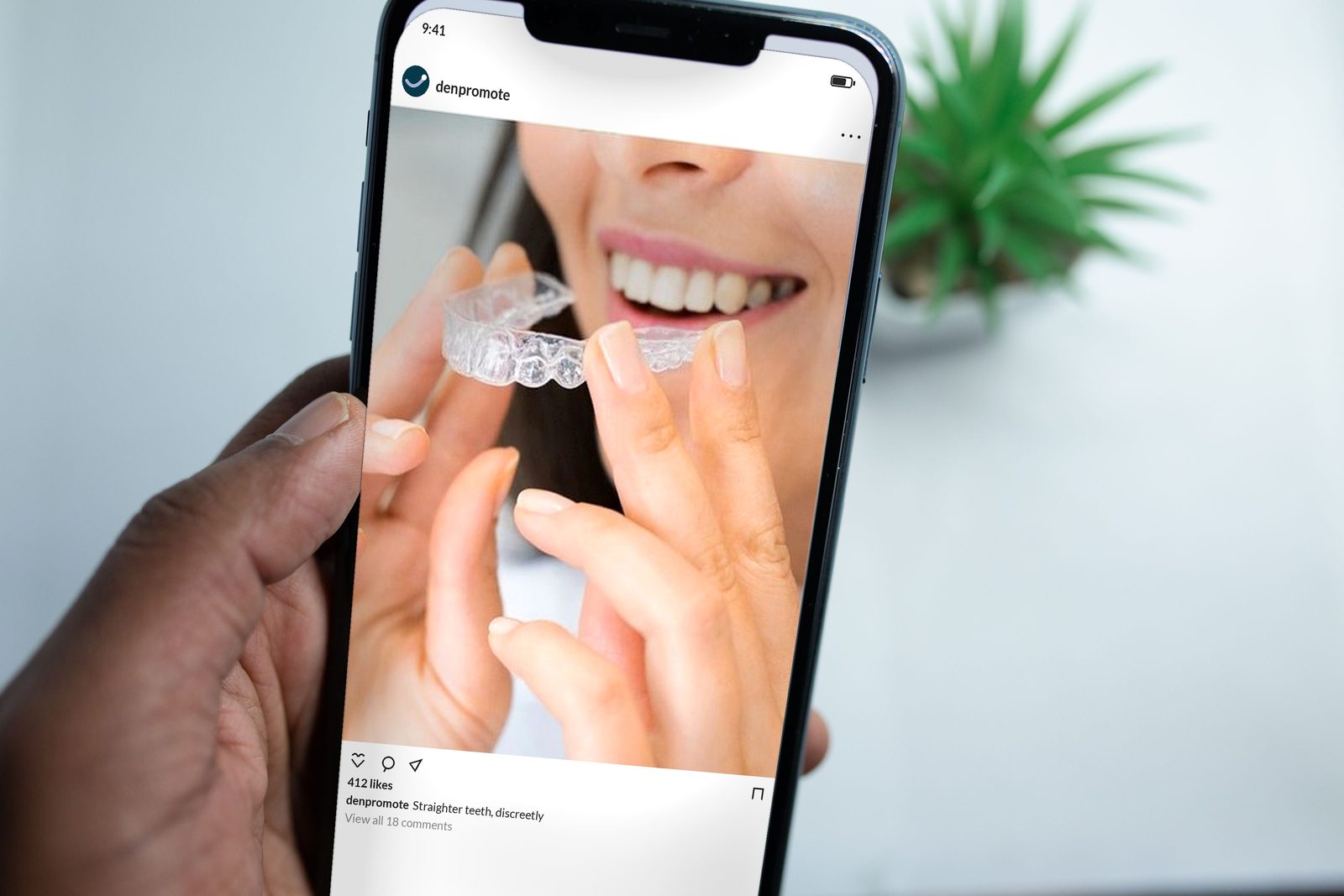
Most practices are told to post more. Very few are told what posting is for, so the account gets judged on whether new patients arrive because of it — and by that measure almost every dental practice’s social media looks like a failure.
It is not failing. It is doing a different job from the one it is being marked against, and it is usually doing it quite well.
Your Followers Are Mostly Your Patients Already
Ask who follows a dental practice. People who have been treated there, the team and their families, a few local businesses, and whoever came in off a recommendation last spring. Practically nobody follows a dentist they have never been to.
Organic reach then goes mostly to those followers. So a post lands in front of an audience that has already chosen you, which means the one thing it structurally cannot do is find somebody new.
That is worth saying plainly because it changes what good looks like. An account reaching four hundred existing patients every week is working. It is simply not doing what a leaflet drop or an advert does.
Post for the Person Checking You Out
There is a moment that matters more than any of this, and it happens off your account. Someone gets your name — a friend recommends you, they pass the practice, they find you on Google — and before ringing they look you up.
What they are doing in those ninety seconds is deciding whether you are safe. In dentistry the barrier is rarely price first. It is fear, and embarrassment about how long it has been.
So the questions your profile is really answering are: what is it like in there, who will I have to face, and will they judge me. A grid of stock smiles and offer graphics answers none of them.
Social media does not find you patients. It decides whether the ones who already found you go through with it.
What to Post, and How Often
Everything that does that job is something you already have.
- The team, by name. A face with a name under it is the single most reassuring thing on a dental profile. The person worried about being judged wants to know who is going to be in the room.
- The room, and the equipment. Somebody who has not been to a dentist in nine years is imagining the surgery they left. Show them the actual one.
- One question, answered. The questions reception fields all day are the ones people are too embarrassed to ask. Answer one properly rather than posting a fact about flossing.
- What a first appointment involves. Minute by minute, including the bits people dread. Anxiety thrives on not knowing the shape of the thing.
- A result, with consent. Effective, and the most regulated thing here. The next two sections are about doing it properly.
Twice a week, indefinitely, beats daily for a fortnight and then nothing. The reason is not the algorithm — it is that the account has to look alive at the moment somebody checks it. A profile whose last post was in March reads as a practice that might have closed, which is the opposite of the job.
Get Consent in Writing, and Say Where It Will Appear
The GDC is unambiguous. Standard 4.2.3 of the Standards for the Dental Team says “you must not post any information or comments about patients on social networking or blogging sites”, and its guidance on using social media requires you not to publish anything that could identify a patient without their explicit consent.
The part most practices miss is what that consent has to contain. The guidance asks you to specify “how exactly the information you propose to share will be used, for what purpose and where it will be available”. A signature under the words “for marketing purposes” does not meet that. Naming the platforms, saying the post is public, and saying it stays up does.
Two practical notes from the same document. Deleting a post afterwards does not undo it — the GDC asks you to presume anything posted is there permanently. And photographs can carry your location in the file, which is worth knowing before a clinical image leaves the practice.
Before-and-after images have a second set of rules on top, from the ASA: they must be genuine and representative, and you need signed, dated proof to back up what they show. The ASA’s advice for dental advertisers covers whitening claims in the same place, including not exaggerating results through editing.
Never Name Botox, Not Even in a Hashtag
If the practice does facial aesthetics, this is the rule that catches people, and it is not a matter of degree. Botulinum toxin is a prescription-only medicine, and prescription-only medicines cannot be advertised to the public at all.
The ASA’s guidance treats almost any reference — direct or indirect, in a caption, in a hashtag, on your own page rather than in paid advertising — as an implied advertisement for that medicine. A single hashtag is enough.
You can say the practice offers facial aesthetics and that consultations are available. You cannot name the product, and you cannot show a result and describe it as something else.
The GDC’s guidance on advertising sits alongside all of this and is worth a read for anything the practice publishes: it sets out what has to appear, and it is strict about titles like “specialist” and about claims that create an unjustified expectation of results.
Engagement Is Not the Same as Bookings
Likes, saves and comments measure attention, and attention is the right thing to be measuring on this channel. The mistake is assuming attention turns itself into an appointment.
Look at where it stops instead. It is almost always the same three places.
- The price question in the comments. Somebody asks “how much?” under a post and gets no reply, or a “DM us”. Everyone else reading the thread learns that asking gets you nowhere.
- The message at nine in the evening. Which is when people think about their teeth, and is answered when the practice opens on Tuesday. The urge does not survive the wait.
- The link in the bio. It points at the homepage. Someone who arrived interested in one thing now has to go looking for it.
Fix the Handoff
This is the cheapest work available to a practice, because the attention has already been earned and is being dropped.
Answer the price question in public. Not with a figure you cannot stand behind, but with a range or a “consultations are free and you leave with the cost in writing”. The person who asked is one reader; the useful audience is everybody else who wanted to ask.
Then make the link go somewhere that finishes the job. If you are running a treatment offer, an open evening or an implant day, it needs a page of its own that answers the questions the post raised and takes the booking there and then — not a homepage with a phone number on it.
One link, one thing to do, on a page about that thing.
When You Need People Who Have Never Heard of You
Everything above has a ceiling, and the ceiling is your own patient list. When the diary needs people who are not on it, that means paying for reach, and it is a different exercise with different expectations.
Paid social puts you in front of people who were not looking for you. The creative has to do all the work of stopping somebody mid-scroll, and most of the audience is not in the market this month. Search does the opposite: fewer people, but they have typed what they want. For a specific treatment in a specific town, search is usually the better buy.
Either way, judge it on visits and bookings rather than on likes — and give it somewhere to land that can take a booking, because paid traffic to a homepage leaks in exactly the way the bio link does.
Where We Can Help
The page at the end of that handoff is the thing worth getting right, and it is what we build: a page for the treatment you are posting about — implants, aligners, bonding — on your own website. One thing on it, one short form, and the questions that stop somebody booking answered before they have to ring and ask.
That is Growth, at £599 a month, and it includes the Google Ads to send people to it, because your followers will not fill it on their own. We are a Google Partner, managing Google Ads since 2009, and the budget goes straight to Google on your own card.
The prices are all on one page, which is more than most of the people selling you this will tell you.